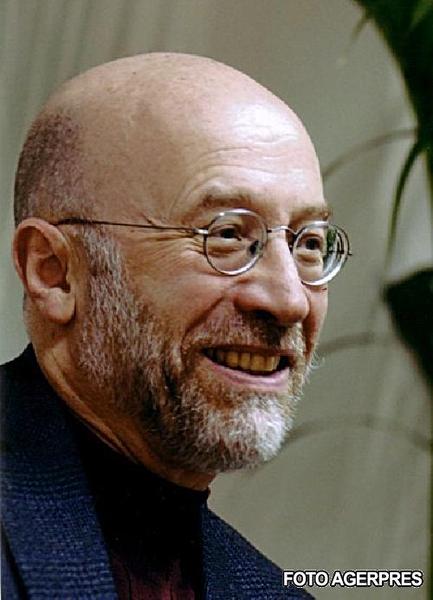
Decesul sau a fost anuntat printr-un comunicat de la New York University, unde el a predat pentru multi ani. In septembrie 2008, el a fost diagnosticat cu "Scleroza laterala amiotrofica", cunoscuta si ca boala Lou Gehrig. In doar cateva luni, el a fost paralizat, putand sa comunice doar cu ajutor mecanic. In ciuda afectiunii, Judt a continuat sa tina discursuri si sa scrie.
Judt, care s-a nascut si crescut in Marea Britanie, a predat in universitati americane cea mai mare parte a carierei sale. Istoricul locuia in Manhattan.
El si-a inceput cariera ca specialist in istoria intelectualitatii franceze postbelice, iar in cea mai mare parte a vietii a reprezentat ideea intelectualului angajat.
In tinerete, Judt a fost un sionist de stanga declarat, pentru a deveni ulterior "un social-democrat universalist", suspicios fata de ideologiille de stanga si fata de rolul tot mai puternic al Statelor Unite ca singura superputere la nivel mondial.
In 2008, el a fost inclus in lista "Top 100 Public Intellectuals" realizata de Foreign Policy.
El este cunoscut pentru comentariile sale publicate in The New York Review of Books, The New Republic, The Times Literary Supplement si The London Review of Books.
Puteti citi aici necrologul realizat de New York Times.
Citeste aici mai multe despre Tony Judt.















In 2003, in an article for the New York Review of Books, Judt argued that Israel was on its way to becoming a "belligerently intolerant, faith-driven ethno state." He called for the conversion of "Israel from a Jewish state to a binational one" which would include all of what is now Israel, Gaza, East Jerusalem and the West Bank. This proposed new state would have equal rights for all Jews and Arabs living in Israel and the Palestinian territories. The article drew strong criticism from those who saw such a plan as destroying Israel and replacing it with a predominantly Palestinian state governed by a Palestinian majority. The NYRB was inundated with over a thousand letters within a week of the article's publication, peppered with terms like “antisemite” and “self-hating Jew,” and the article led to Judt's removal from the editorial board of The New Republic.
http://www.youtube.com/watch?v=dwePmYzQn68
http://en.wikipedia.org/wiki/Tony_Judt
http://en.wikipedia.org/wiki/The_Israel_Lobby_and_U.S._Foreign_Policy
http://www.nybooks.com/articles/archives/2006/nov/30/the-adl-and-tony-judt-an-exchange/
http://www.tabletmag.com/scroll/35949/tony-judt-on-the-flotilla-j-street-and-%E2%80%98linkage%E2%80%99/
Those onboard were the usual mix: Idealists, genuine NGO types, angry pro-Palestinian activists, and so on. But the Israelis knew that. Their reaction was almost unimaginably pig-headed: It doesn’t show much, other than that the country is increasingly cut off from world opinion. How do they think people will react to what is effectively piracy? They were doomed to be the bad guys—trapped in the logic of their own pointless blockade.
You say the Israel Lobby is too influential, albeit in a way analogous to other lobbies; and you say that criticism of same shouldn’t be censored, or self-censored. Beyond creating a space for dissent, what do you propose be done to lessen the Israel Lobby’s influence?
Create a counter-lobby. Sure there is J Street, but it is almost always on the defensive, responding to absurd exaggerations from the other side. And anyway, it has no money. The only way to proceed, it seems to me, is to build a counter-opinion, a counter-consensus that the Israel Lobby is bad for America. Actually, it is even worse for Israel, but no one here cares about that. So it is all about creating a public space in which to discuss these things. Hence my essays.
http://www.dp-news.com/pages/detail.aspx?l=2&articleId=46375
http://www.guardian.co.uk/books/2010/aug/08/tony-judt-obituary
In his guise as a political and historical essayist, he was a fearless critic of narrow orthodoxies and bullying cliques, from communist apologists to the Israel lobby, from "liberal hawks" to progressive educationists. And his political writings have proved not only perceptive but often prophetic ...
In two books, Judd used lines from Camus as epigraphs: "If there were a party of those who aren't sure they're right, I'd belong to it," and "Every wrong idea ends in bloodshed, but it's always the blood of others." They could stand as the mottoes of his own sadly abbreviated but splendid life's work ...
Tony Robert Judt, historian, born 2 January 1948; died 6 August 2010
http://www.scribd.com/doc/15697668/Tony-Judt-Romania-La-Fundul-Gramezii
http://www.cartidownload.ro/Diverse/232688/Tony_Judt_Romania_La_Fundul_Gramezii
Cu România, e alta poveste
http://www.contrafort.md/2001/84/251.html